
Design portfolio
How can you stand out?
The portfolio is the centerpiece of your design school application. It helps assess your way of thinking, your creativity, and your potential for growth.
A strong portfolio does not simply present finished results. Above all, it should tell the story of your process: your research, ideas, trials, mistakes, and explorations. This approach helps us understand how you build a project.
We recommend selecting work that truly reflects who you are, even if it is simple or academic. A diversity of media is also an asset: drawing, photography, graphic design,
objects, personal experiments, or school projects can coexist. Each project should be accompanied by a clear explanation of your intention and thinking.
Authenticity is essential: a sincere and imperfect portfolio is better than a set of standardized works with no personality. The use of artificial intelligence is allowed in the creation of your portfolio, provided it is part of a personal and creative approach and that your intention, choices, and design process remain clearly identifiable. Any use of AI tools must be clearly stated and explained in the portfolio.
Cover letter
Give meaning to your journey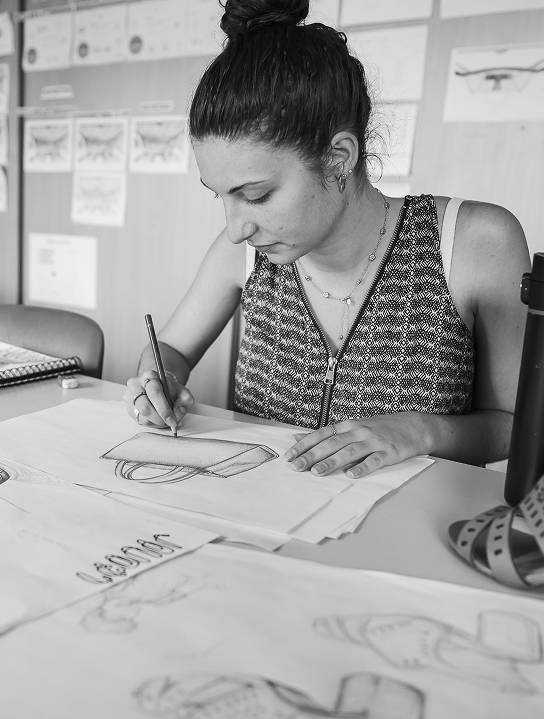
The cover letter is a key element for understanding your journey and your design study project.
It should explain why you chose this direction, what attracts you to design, and how you imagine your future in this field. It is not simply about repeating a résumé, but about telling a coherent and personal story.
A strong cover letter is simple, structured, and sincere. It highlights your interest in creation, your influences, meaningful experiences, and your vision of design. The most convincing applications are often those that express a genuine intention rather than a formatted speech.
CV
Present a clear and readable background.
Your CV should make it easy to quickly understand your academic background and experience.
Clarity and simplicity are essential. Your background should be presented chronologically and in a structured way, highlighting relevant experience related to creativity, design, or personal projects.
Technical skills, internships, or community involvement can also be highlighted when they provide a fuller understanding of your profile. The aim is to offer a concise, readable, and professional view of your background.
Admissions interview
Share your vision of design!
The admissions interview is an essential exchange with the Academic Management team. It is not an exam, but an open discussion about your background, motivations, and professional project.
This exchange goes beyond the application file to better understand your personality, curiosity, and way of approaching design. It is important to be able to explain your approach, inspirations, and goals simply.
Spontaneity and authenticity are essential. The goal is to understand your potential and your ability to commit to a demanding and stimulating creative path.
Overall advice
Reveal your creative identity.
Beyond the requested documents, a successful design school application rests on a simple idea:
be coherent and authentic.
We are not looking for a perfect profile, but for curious, committed personalities capable of
developing their own creative language. Your application should reflect who you are today and your potential for growth tomorrow.
The portfolio is the centerpiece of your design school application. It helps assess your way of thinking, your creativity, and your potential for growth.
A strong portfolio does not simply present finished results. Above all, it should tell the story of your process: your research, ideas, trials, mistakes, and explorations. This approach helps us understand how you build a project.
We recommend selecting work that truly reflects who you are, even if it is simple or academic. A diversity of media is also an asset: drawing, photography, graphic design,
objects, personal experiments, or school projects can coexist. Each project should be accompanied by a clear explanation of your intention and thinking.
Authenticity is essential: a sincere and imperfect portfolio is better than a set of standardized works with no personality. The use of artificial intelligence is allowed in the creation of your portfolio, provided it is part of a personal and creative approach and that your intention, choices, and design process remain clearly identifiable. Any use of AI tools must be clearly stated and explained in the portfolio.