educational project
A New Era of Resilient Ecosystems
Aïda KHEMAÏSSIA & Sébastien DELERBA - 2025
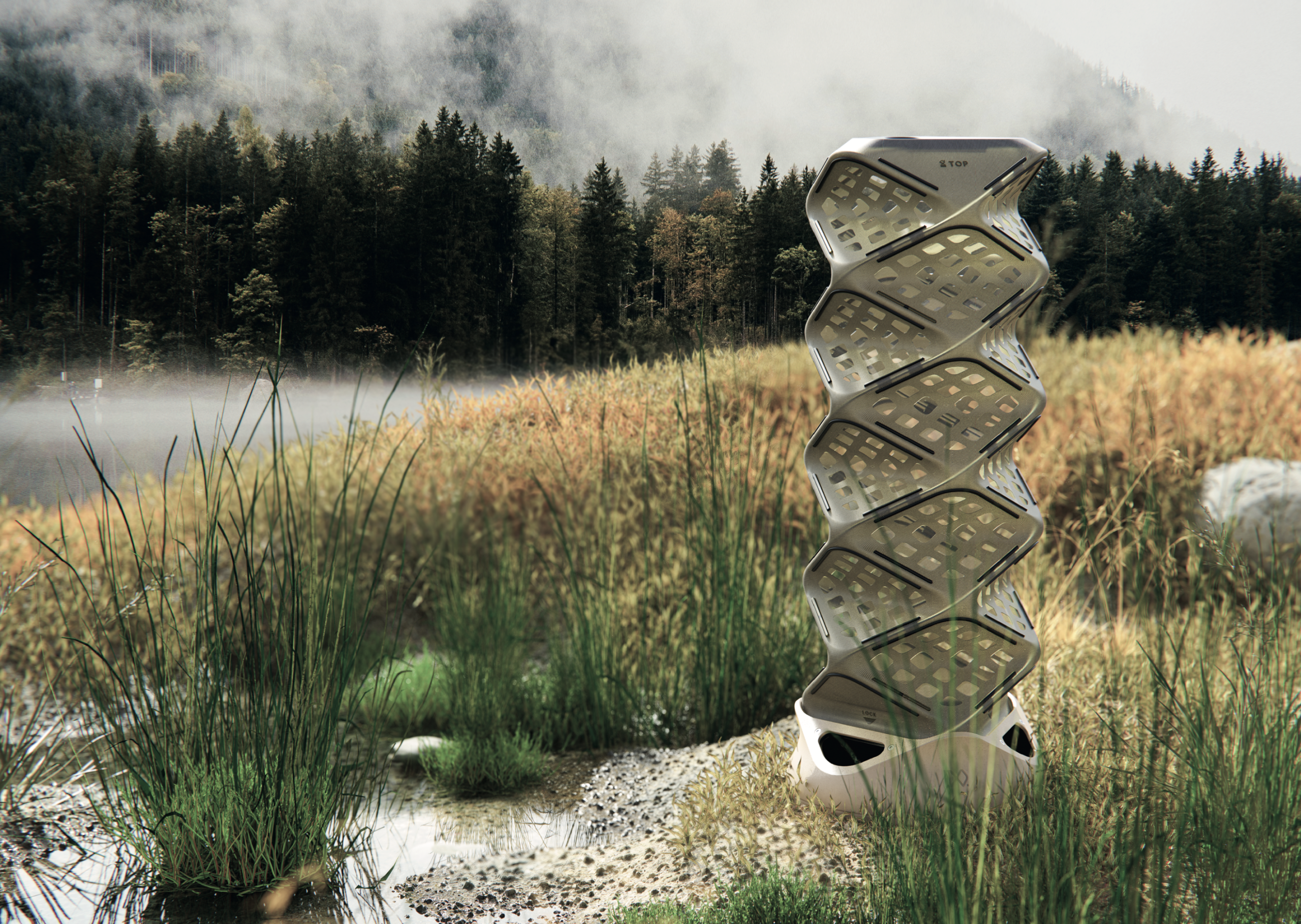
This project is based on the principle of “design as an ally of the ecosystem: working with natural processes rather than imposing its own rules.” Rather than introducing an intrusive artificial object, it uses biomimicry to create self-sufficient structures that integrate seamlessly into their environment.
The module captures and redistributes water to support biodiversity, reflecting a philosophy of integration rather than domination. By mimicking natural cycles and using materials that encourage regeneration and decomposition, IDO acts as a catalyst for ecological resilience, proving that human intervention can nourish, rather than disrupt, the fragile balance of living networks.
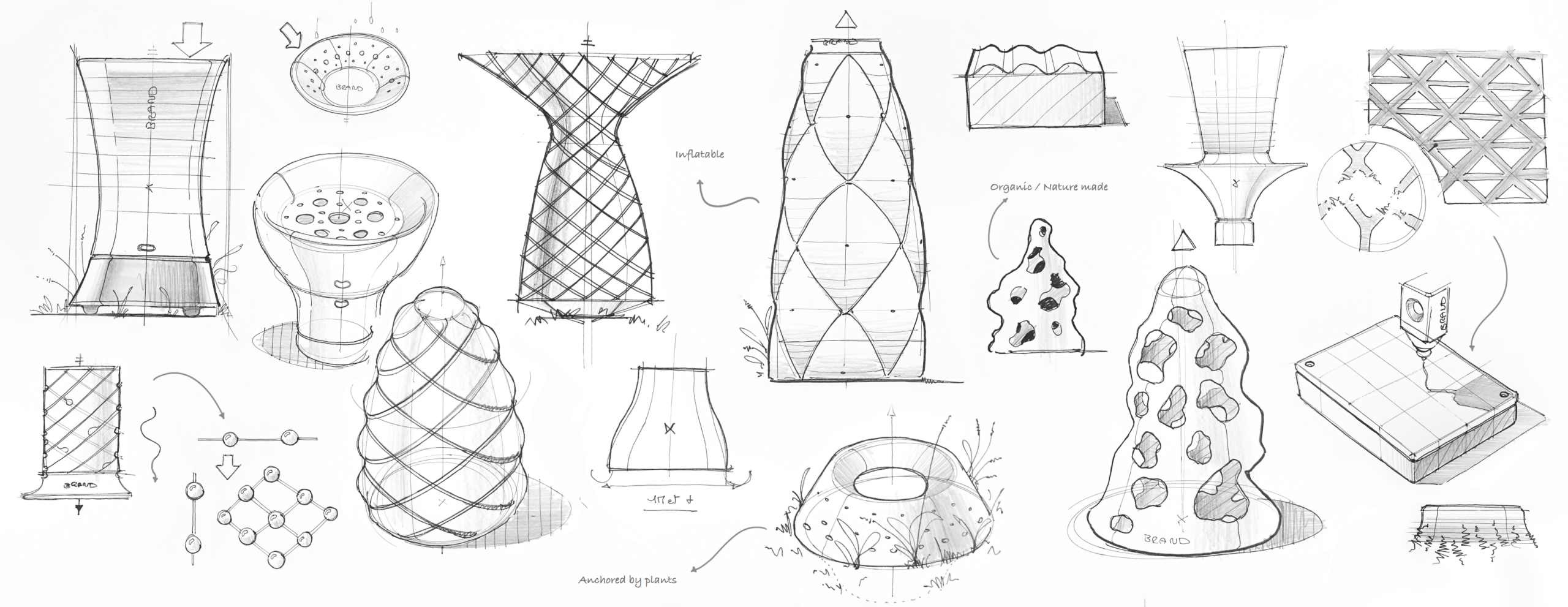
The project's ideation phase unfolded through continuous iteration and questioning, guiding the design from an initial concept inspired by origami toward a fully developed solution. We refined each idea to balance efficiency, robustness, and portability, constantly asking how a small modular device could have a real ecological impact while remaining lightweight, durable, and discreet.
This ongoing cycle of testing and feedback allowed the concept to mature into a self-sufficient structure that works in harmony with natural processes.
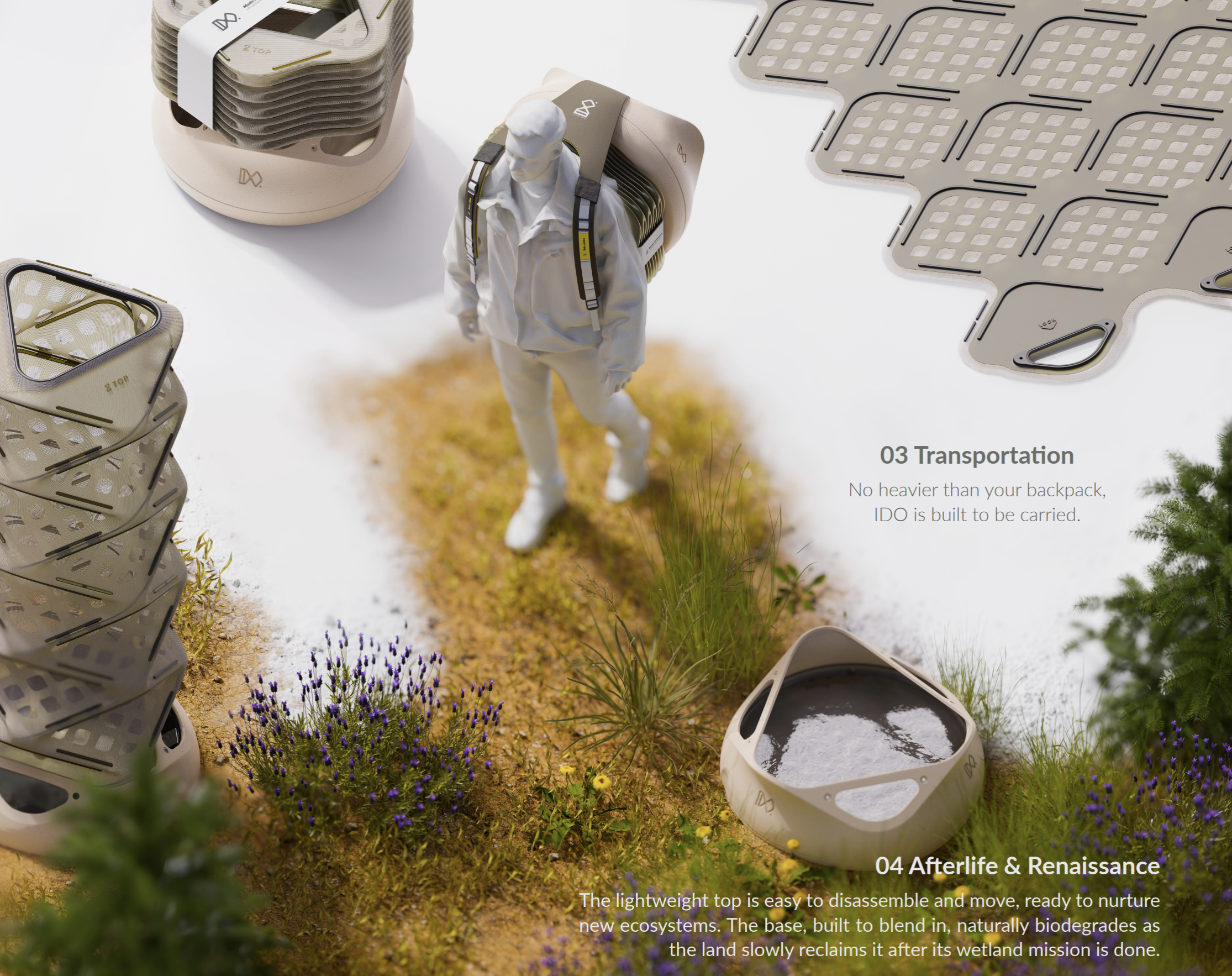
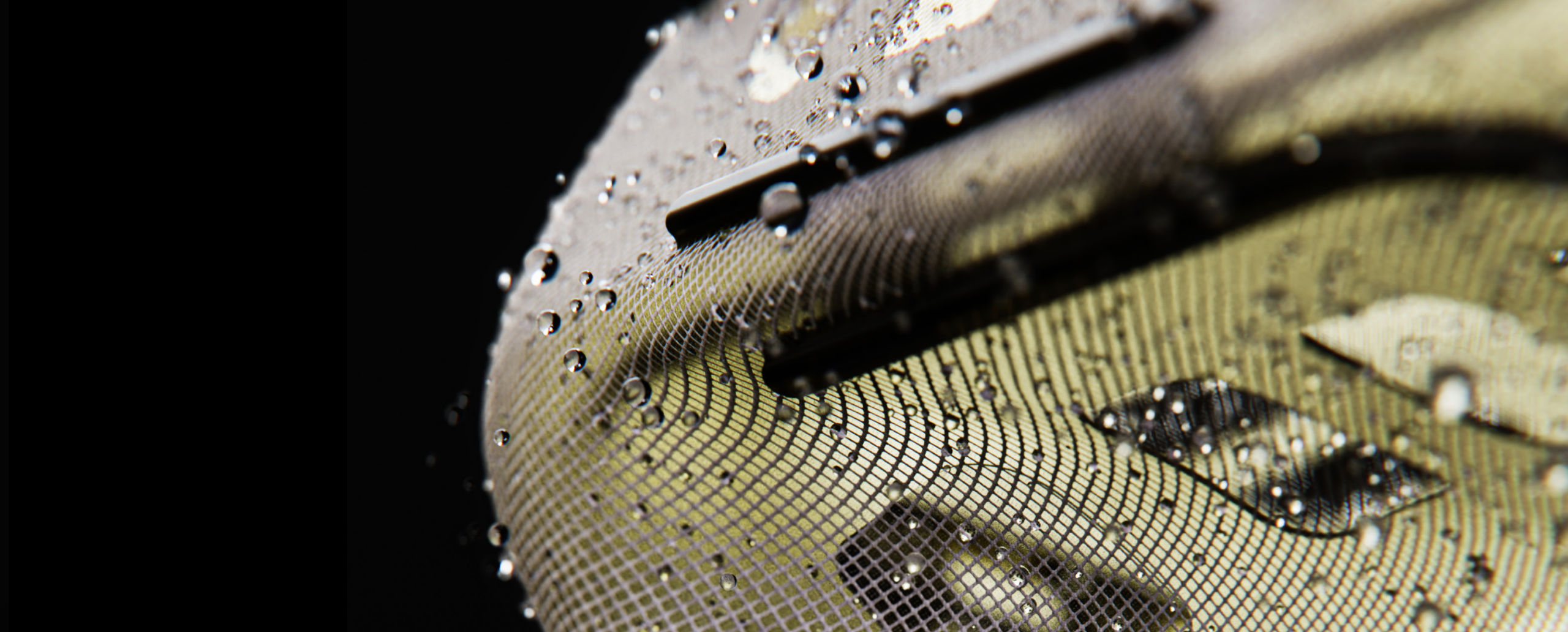
IDO is designed with two complementary functions to capture and distribute water efficiently. Its hydrophilic/hydrophobic top collects moisture from the air and channels it toward the base, which gradually releases the water, keeping the soil moist for weeks and nourishing the surrounding ecosystem.
Inspired by traditional terracotta pots, or oyas, known for their porosity and efficient water diffusion, IDO's base mimics the porosity of this natural material. This design allows moisture to seep gradually into the surrounding soil, ensuring a steady and efficient supply without waste.
Because each micro-ecosystem has its own weather conditions, IDO must adapt. The design achieves this through two sizes: a smaller one with 30° slanted faces to optimize dew collection, and a larger one that maximizes surface contact for fog capture.